
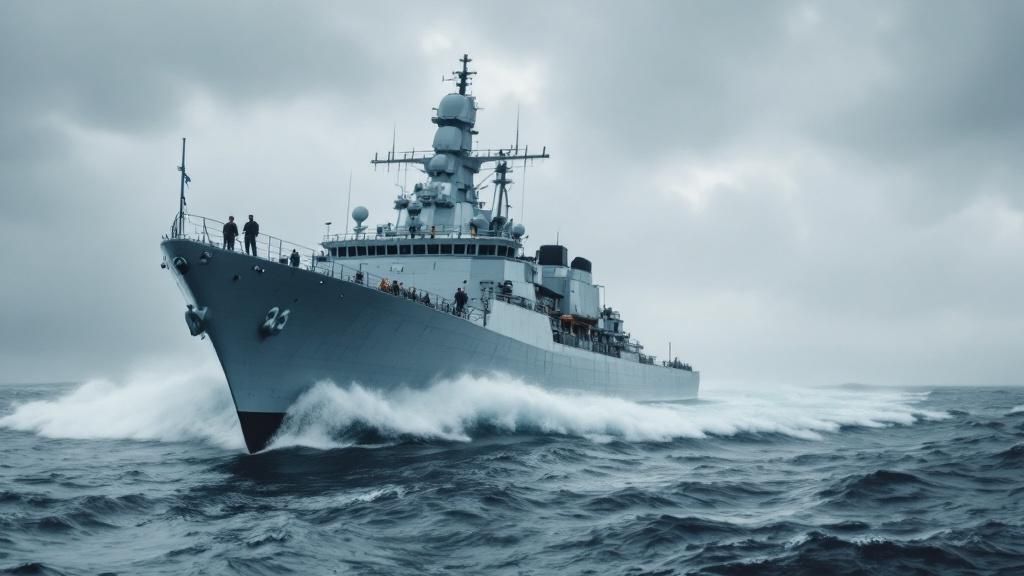
The Royal Navy is getting ready to board and detain Russian shadow fleet vessels active in UK waters, after Prime Minister Sir Keir Starmer approved military action against the ships. Russia has been running vessels without valid national flags to circumvent global trade restrictions and continue funding its war in Ukraine. Ministers established a legal basis in January under the Sanctions and Money Laundering Act 2018 that permits forces to stop and hold the sanctioned vessels. The government believes approximately 75 per cent of Russia’s crude oil is carried on ageing ships in the shadow fleet, with 544 vessels believed to be involved in the operation. Senior government officials have verified that specialist military units have finished preparation for the operation, with the first boarding expected to occur imminently.
The Phantom Fleet Issue
Russia’s shadow fleet represents a sophisticated sanctions-evasion operation that has allowed Moscow to maintain the export of crude oil whilst bypassing global trade barriers intended to deprive its war machine of funding. These vessels, generally older oil tankers operating without valid national flags, have become critical to Russia’s ability to finance its military campaign in Ukraine. The government calculates that roughly 75 per cent of Russian crude oil is shipped by these ships, highlighting the extent of the challenge. With 544 vessels under sanctions identified as part of the shadow fleet, the challenge facing British forces is significant and demands close cooperation with partner countries.
The complexity of tackling the shadow fleet extends beyond basic detection and interception. Royal Navy personnel have already assisted adjacent nations including Finland, Sweden and Estonia with surveillance and tracking operations in recent weeks, highlighting the international scope of the threat. Ship-tracking technology enables military planners to identify sanctioned vessels several weeks ahead of they arrive in UK waters, providing sufficient time for tactical preparation. However, the prospect of boarding vessels with possibly armed crews necessitates specialised instruction and preparation. Senior military units, such as the Special Boat Service and Royal Marines, have undertaken comprehensive wargaming exercises to prepare for various scenarios and levels of resistance they may encounter.
- Ageing tankers operating without valid national flags evade sanctions
- Government assesses 75 per cent of Russian oil utilises covert fleet
- 544 sanctioned vessels identified as part of the scheme
- Ship-tracking technology detects vessels weeks prior to arrival in UK waters
Legal Foundation and Strategic Planning
The government’s ability to conduct military operations against vessels under sanctions rests upon a carefully constructed legal foundation identified by government legal counsel in the early part of this year. The 2018 Sanctions and Money Laundering Act has been found to provide the required legal means permitting the deployment of armed force against vessels operating in UK waters that breach international sanctions regimes. This legislative framework enables the Royal Navy and connected military organisations to intercept and detain ships without requiring extra parliamentary authorisation for every single operation. The identification of this legal basis represents a substantial advancement, permitting ministers to move forward with enforcement initiatives that would formerly have encountered significant legal challenges.
Defence officials and military planners have been collaborating to identify which sanctioned vessels will become the first targets for boarding operations. Ship-tracking technology delivers essential information, enabling authorities to track the activity of flagged vessels and predict their arrival in British waters with considerable accuracy. This advance warning allows operational teams to conduct detailed planning, coordinating with intelligence agencies and ensuring that specialist units are deployed effectively. The strategic approach emphasises careful planning and preparation rather than reactive responses, improving the chances of successful operations whilst lowering exposure to military personnel involved in the boarding procedures.
The Sanctions and Financial Crime Act
Government lawyers identified the 2018 Sanctions and Money Laundering Act as the legal instrument permitting military boarding operations against sanctioned vessels in UK territorial waters. This Act provides the statutory authority necessary for armed forces to intercept and detain ships suspected of breaching international sanctions imposed upon Russia. The Act represents a previously untapped mechanism that allows for the enforcement of sanctions through military means rather than purely administrative or diplomatic channels. Its use against the shadow fleet illustrates how existing legislation may be modified to tackle contemporary security threats and sanctions evasion tactics.
The establishment of this statutory foundation occurred following comprehensive examination by state counsel examining current legislation and their applicability to shadow fleet operations. Previously this year, British armed forces aided American troops in apprehending the Marinera oil tanker, which had purportedly carried oil for Russia, Iran and Venezuela in breach of sanctions. This effective combined effort prompted ministers to investigate how British defence forces could autonomously conduct equivalent interventions against sanctioned vessels. The regulatory structure now in place permits such operations to move forward with appropriate state authorisation and worldwide legitimacy.
Military Preparations and Instruction
Specialist military units have undertaken rigorous training drills in recent months to get ready for boarding procedures against vessels in the shadow fleet. These tactical simulations have focused on multiple scenarios, including confrontations involving armed crew members and pushback from vessel personnel. The training programme has been developed to furnish personnel with the operational expertise and functional competencies necessary to perform safe and effective boarding procedures in challenging maritime conditions. Senior defence officials have stated that this extensive preparation period is now finished, clearing the path for active deployments. The focus of these exercises has progressed past fundamental boarding procedures to encompass negotiation tactics, medical intervention procedures, and contingency measures for managing unforeseen opposition or hazardous conditions aboard the targeted vessels.
The choice of units involved in shadow fleet operations will depend upon the anticipated level of resistance expected from crews aboard individual vessels. Military planners are utilising intelligence reports and vessel-specific information to establish the suitable force composition for each operation. The Special Boat Service, noted for maritime specialist operations, and the Royal Marines, skilled in amphibious and boarding procedures, are both expected to participate in these missions. The adaptable approach to troop deployment ensures that operations remain commensurate with assessed threats whilst maintaining operational efficiency. Government figures are eager to emphasise that personnel participating have received thorough preparation and possess the expertise necessary to conduct these operations in a safe and professional manner.
| Unit | Primary Role |
|---|---|
| Special Boat Service | Maritime specialist boarding operations |
| Royal Marines | Amphibious and boarding procedures |
| Royal Navy Personnel | Vessel monitoring and tracking support |
| Ministry of Defence Officials | Operational planning and coordination |
- Training scenarios cover management of crew armed resistance and hazardous sea conditions.
- Unit positioning guided by threat evaluations of specific ship threat profiles.
- Personnel demonstrate expertise in safe and professional boarding procedure execution.
International Cooperation and Wider Framework
The British administration’s decision to intercept shadow fleet vessels represents a significant escalation in attempts to implement global trade restrictions against Russia’s oil trade. Royal Navy personnel have already provided crucial assistance with neighbouring Nordic nations, such as Finland, Sweden and Estonia, in monitoring and tracking questionable ships navigating through the Baltic and North Sea regions. This joint effort emphasises the shared commitment amongst northern European allies to impede Russia’s ability to circumvent sanctions imposed following its invasion of Ukraine, showing that shadow fleet interception is not merely a British concern but a shared defence priority.
Prime Minister Sir Keir Starmer’s decision to approve armed intervention aligns with his attendance at the Joint Expeditionary Force summit in Helsinki, reflecting the administration’s resolve to maintain focus on the Russian threat despite recent geopolitical developments in the Middle East. Ministers have emphasised that undermining Russia’s shadow fleet operations will substantially reduce financial support for what Starmer termed “Putin’s war machine” and its “barbaric campaign” in Ukraine. The official assessment that roughly 75 per cent of Russian crude oil moves through ageing shadow fleet vessels demonstrates the crucial significance of these enforcement actions to the broader sanctions regime.
The Joint Expeditionary Force Initiative
The JEF alliance consisting of military coalitions of nations across northern Europe, delivers the structural foundation for collaborative efforts against illicit shipping activities. Starmer’s address to the JEF summit on Thursday is anticipated to emphasise Britain’s commitment to this collaborative framework whilst showcasing the concrete measures being taken to enforce sanctions. The coalition’s combined maritime assets and intelligence-sharing mechanisms enhance the effectiveness of locating and apprehending restricted shipping, ensuring that Russia is unable to exploit gaps in monitoring coverage across European waters.
Political Importance and Resistance
The government’s choice to undertake military boarding operations represents a significant escalation in Britain’s approach to addressing Russian sanctions evasion, indicating the first time UK forces will directly interdict vessels in domestic waters. The move carries significant political weight, showcasing the Prime Minister’s resolve to maintain pressure on Moscow notwithstanding conflicting crises requiring ministerial engagement. By approving these operations, the government conveys to friends and foes alike that Britain stays committed to maintaining the worldwide sanctions regime, reinforcing its role as a leading voice in coordinating Western responses to Russian actions in Ukraine.
However, the approval of military boarding operations has not been free from examination. BBC Verify’s analysis raised questions about the effectiveness of current legal frameworks, noting that numerous sanctioned ships had transited the English Channel in the weeks after the designation of the Sanctions and Money Laundering Act as the statutory foundation for intervention. Critics have questioned whether the government’s strategy sufficiently tackles the scale of the shadow fleet problem, with some suggesting that stronger international cooperation and tougher enforcement measures may be required to effectively undermine Russia’s oil trade and starve its war effort of essential income.
